Friday, August 29, 2008

planet why - a social business


PLANET WHY – A GUEST HOUSE WTH A DIFFERENCE


Planet Why, will be a social business, generating income to support itself and enable Project Why’s mission to continue into the long term.

Planet Why will employ, train, and house disabled young adults, vulnerable women and their children. It will provide employment and other opportunities for local people through the foreign visitors it will bring and the education and training it will make available.

Although this is a social business – that is, driven primarily by the mission not the maximization of profits – it will have to succeed first as a business before it can achieve its social and environmental objectives or succeed as the sustainability concept for Project Why.

Just as no commercial business can start without capital investment, and very few commercial businesses make a profit immediately, Planet Why similarly needs initial investment and support during its development phase.

Because business investors normally expect returns that a social business cannot achieve, we have to look to non-traditional sources for the start-up backing we need.

That is why we ask you to read this.

Let me be clear: we are not just another charity asking for more handouts. Our proposition is different. We are offering you the opportunity to join us and enable us to become very much more self-sufficient financially.

The social business we propose makes sound business, social and environmental sense. We know we can make it a success and by working with the right partners, we will reach that goal more quickly, efficiently and effectively.

This is no dream. It is rooted in reality. We have already taken the first step – we own a prime site, ideal for this particular social business.

Let me now tell you a bit about Planet Why – our guesthouse with a difference that will make a difference – and our vision for the future. You also need to know about Project Why, our finances, the legal position etc. All these are covered in more detail in the annexes – referred to below and listed at the end - so if what you read here interests you, do read them too.

PLANET WHY (Annex 1)

Planet Why Guest House will offer travellers a chance to enjoy authentic Indian hospitality and culture in a clean, well-run, reasonably priced place, furnished using local materials. Because the site is near the Delhi green belt, but close to the Metro, the proposed motorway, and the airport, guests can mix quiet rural days with the bustle of central Delhi. While it would be a good base for a complete one to two week holiday, or for a longer period for those seeking time to relax and immerse themselves in India, it would also be ideal for travellers looking for somewhere to start and/or end their wider travels in India because of its closeness to major roads and the airport.

Given India’s fast-growing economy, and Delhi’s booming tourist industry, an obvious opportunity for commercial investment is the hospitality sector. It is well publicised – in The Lonely Planet, for example - that there is a shortage of reasonable and comfortable guesthouses in the Delhi area. A common European comment is that there is “nothing very good between the cheap backpackers’ accommodation and westernised hotels or five star luxury”.

We know from our research that social businesses can work in hospitality. One of the strongest examples is the Ninos Hotel in Cusco (www.ninoshotel.com) where profits from the guesthouse support child aid projects.

In addition, as well as the growing trend for visitors to want to support ‘local’ or ‘authentic’ places (sustainable or fair-trade tourism), more people are asking to stay in environmentally sensitive, low carbon accommodation (green or ecotourism) and an increasing number want to combine some volunteering with their holiday (voluntourism). Planet Why will be able to cater for all these currently niche but potentially large segments of tourism.

Another reason we have chosen hospitality is that it offers a wide range of unskilled and semi-skilled jobs, enabling people with disabilities and those who have had little education or training, to be able to work in the sector, with proper support. Tourism and hospitality, through the multiplier effect, can also help regenerate an area.

Planet Why will also have, on site, a residential home where adults with disabilities, vulnerable women and their children, will be able to live and be cared for in a sheltered environment, while gaining marketable skills, a sense of their own self-worth, and as much independence as each is capable of.

Because Planet Why will be part of the local community, with some of its workers also drawn from the area around, it will benefit from the crèche, primary and secondary schools we offer, as well as from the income and jobs generated by the steady flow of foreign tourists. We intend to involve local people in the cultural side (such as dancing, cooking, yoga and art lessons) and in the practical (because we will need auto rickshaws and drivers, fresh fruit and vegetables, milk, bread, laundry, etc.). While our aim will be, over time, to provide many of these services ourselves, we will always seek to source and staff locally what we cannot ourselves offer.

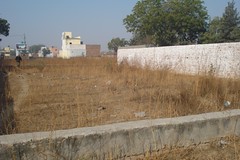
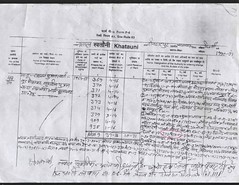
We bought the Planet Why site for 8.2 million rupees in 2008. It measures 978 square meters. The site consists of two adjacent plots, each having its own entrance (to ensure privacy for guest house residents).

The guesthouse will have 10 rooms (five with disabled access) with a reception area, lounge and common areas. The care centre will cater for up to 10 people with disabilities and a maximum of six women, but with extra space for a further 6 for short-term use. (Architect’s plans are at Annex 2.)

The centre will have activity rooms, classrooms, computer centre and crèche, so that we can offer a wide range of training and community based activities. Further space will be available in the large basement (where the utilities will be housed). (For more on training, see Annex 3.)

Planet Why will be extremely environmentally friendly. Based on the principles of the eminent architect, Laurie Baker (www.lauriebaker.net) it will use solar energy, geothermal heating and cooling, rainwater harvesting, and grey water recycling. (See Annex 4.) It will be a model green business for the local community.

On current prices, we plan to charge around 1500 rupees per night for a standard room (compared with the Government approved Bed and Breakfast rate of between 2000 and 3000Rs per night in Delhi and a typical rate of 5000).

Planet Why will be run by an organisation registered under Section 25 of the Companies Act of India which means that a company can be established ‘for promoting commerce, arts, science, religion, charity or any other useful object’ provided that the profits, if any, or other income is applied for promoting only the objects of the company and no dividend is paid to its members. (Annex 5)

Our financial forecasts (Annex 6), based on an occupancy rate of 60%, show a comfortable rate of return. On an occupancy rate of 75%, we would have sufficient to cover all the costs of the residential home, and on 100%, we would be in surplus. We will have opportunities to supplement our earnings through our other activities on site (including training and the provision of additional services to guests and local people). Once Planet Why is established, we will move many of our existing Project Why activities to it, thus saving on overall costs. (See Annex 7 for a more detailed explanation of our model of financial sustainability for Project Why.)

The land has already increased in value since it was purchased earlier this year. Any investment therefore has that as security. In addition, we know that the site would also be suitable for other commercial propositions, such as a residential home for elderly people, housing units, etc.

PROJECT WHY (See Annexes 8 and 9 for more details on the history/legalese)

The Sri Ram Goburdhun Charitable Trust, using the name ‘Project Why’, is a non-governmental, not-for-profit organization, engaged in education support and life-skills enhancement. It was created in May 1998 by Mrs Anouradha Bakshi, and she continues as Founder Director. She works closely with her Board of Directors, steered by a small Executive Committee. This flexible and adaptable organizational form has led to steady growth and dynamic, responsive development. Project Why now employs about 50 staff (paid at the minimum wage) and supports over 700 children. All castes and creeds and many ethnic groups work in and are supported by Project Why, whose staff structure is based on ability and equality.

Project Why has been funded from the outset by a mix of the founder’s personal money, small networks of friends of the project, volunteer created networks, a wider alliance of EU supporters (initiated by Enfances Indiennes), and international support stimulated by the web presence. Currently, it costs 38,867,600Rs p.a. to run.

All these sources have been generous but none can be relied on to fund the project indefinitely or at a predictable level so, from the outset, efforts have been made to generate income directly. Despite many attempts, none was successful – for a variety of reasons, including the legal and regulatory restrictions placed on a charity making and selling for profit – but the long-term goal of a higher degree of financial self-sustainability remains. That is why we are working to establish Planet Why.

The first goal of Project Why was to empower under-privileged and illiterate/semi-illiterate parents to support and guide the educational needs of their children. Using local talent – from the same communities as these parents and children – we have created jobs and developed an effective educational and training programme that now covers crèche to senior ages and also includes a computer centre, a women’s centre (with skills training and support) and a foster home.

Project Why aims at teaching people from an early age the way to empowerment so they can find the solutions for themselves. This has been shown to be the most effective way to bring about long-lasting and meaningful change. Already, the positive results of this approach can be seen in the slums of South Delhi where the project is currently based.

Planet Why embodies our core principles: we are taking constructive action ourselves to solve the problem of our uncertain long-term funding.

WHAT WE OFFER/WHAT WE NEED FROM YOU: one or more of the following:

• make a straight donation, named or anonymous
• organise a fundraising event or scheme
• offer corporate sponsorship (type to be negotiated)
• make available an interest free long-term loan
• or low interest long-term loan with interest holiday until Project Why achieves an agreed level of profit or other milestone
• take an equity stake (% to be negotiated in relation to sum offered)
• make an investment for social as well as/rather than financial return
• give ‘in-kind’ help: expertise e.g. business planning, financial management, marketing etc
• give ‘in-kind’ help: goods/services e.g. building, decorating materials/labour, furniture, furnishings etc.
• with your business experience, come up with something else of value to us.

NEXT STEPS

More detailed information is available if you are interested in taking this further. Please read the annexes and contact us if you have any specific questions or need additional data. We will happily discuss any aspect with you or your advisers. You are also welcome to visit Project Why and the Planet Why site.

We plan to start work on Planet Why as early as possible in 2009 so we are ideally looking for serious expressions of interest by the end of December 2008, with firm commitments in place no later than the end March 2009.

We guarantee our partners a positive and rewarding experience.


Anouradha Bakshi

Founder Director of Project Why and Planet Why


ANNEX 1 PLANET WHY – A BRIEF OVERVIEW

Planet Why is Project Why’s answer to two urgent questions:

• How can we best secure the futures of our special needs disabled children and young adults as they grow beyond school?

• How can we best ensure our sustainability long term?

The first stems out of a reality we have been compelled to face for the past eight years: the grim plight of children and young adults with disabilities in a society that has no place for them. For the handful of such souls that came our way, we had to find a solution, one that would ensure that they live with hope and die with dignity. The answer was simple and clear cut: a residential programme.

Such a programme would also meet the needs of women in distress, those who for reasons beyond their control have been rejected by others (alcohol, drugs, psychological ailments etc). The idea was to offer them short term, middle term or long term refuge.

The second issue is one that reverberates the world over in the minds of all those engaged in any form of developmental activity: the ever-elusive goal of financial sustainability – or at least a more stable and reliable source of core funding.

Our solution is Planet Why: it will answer both questions because it will provide the residential centre and, in time, be the way we can ensure the Project Why approach continues over time to help at least as many children as we now do.

A long journey that took us through many unsuccessful attempts towards financial sustainability finally led us to look at hospitality as a possible and do-able option: hence our decision to establish Planet Why - a guest house with a difference that will make a difference.

Funding for Project Why has always been precarious as we have relied on various sources:

• personal funds and inheritance of the President and founder of the charity
• small networks of supporters created from close friends
• networks created by volunteers of Project Why
• a wider network of supporters in the EU (initiated by Enfances Indiennes)
• international support created by a web-presence

Conscious of the fragility of the funding model and our heavy reliance on donors -some of whom have been generous, but whose giving cannot be forecast reliably, which makes planning difficult - Project Why did make some attempts in the past at financial self-reliance, such as :

• making and selling a variety of products (such as T-shirts, bags, jewellery, cards, chocolates, etc)
• placing donation boxes in markets and shops
• setting up raffles and lotteries
• initiating a one-rupee-a-day programme within the community.

However, complex legislation relating to the production of items such as soaps and food items meant profitable scalability could not be achieved. Further, legal restrictions on the charitable trust meant Project Why could not ‘make money’, even though it was entirely to be reinvested in the Project. (See also Annex 7.)

Hospitality as a sustainability option

Planet Why’s principle purpose is to provide a stable and reliable base for the long term sustainability of the Project Why mission while also supporting the residential centre.

Given India’s fast-growing economy, and Delhi’s booming tourist industry, an obvious opportunity is to find commercial success in the hospitality sector. It is well publicised that there is a shortage of reasonable and comfortable guest houses in the Delhi area (see Lonely Planet etc) and we have seen that the Ninos Hotel in Cusco is exactly this model - a successful guest house whose profits support child aid projects. Moreover the growing trend of tourism with a heart (voluntourism) makes Planet Why an ideal option – one that will also appeal to those wishing to support ‘local’ or authentic places (sustainable or fairtrade tourism), or those seeking environmentally sensitive, low carbon accommodation (green or ecotourism) - or for those just wanting to experience another side of India.

The site chosen will offer travellers a chance to enjoy authentic Indian hospitality and culture in a clean, well-run, reasonably priced place, furnished using local materials. Because the site is in the Delhi green belt, but close to the Metro, the motorway and the airport, guests can mix quiet rural days with the bustle of central Delhi. While it would be a good base for a complete one to two week holiday, or for a longer period for those seeking time to relax and immerse themselves in India. It would also be ideal for travellers looking for somewhere to start and/or end their wider travels in India because of its closeness to major roads and the airport.

Moreover, the dovetailing of hospitality with care gives us the ideal situation to enable us to include persons with disabilities in mainstream activities as even those with limited skills can (when properly supported and trained) find gainful work in this sector.

Mission and objectives of Planet Why

Planet Why’s mission is to create a warm and enabling environment, a place where both visiting guests and their local ‘hosts’ will interface, the former providing the latter a unique chance to show case their potential and step into a world too often denied to them.

Therefore its objectives are:

• To set up a residential facility for distressed women and disabled people having no other option or alternative, to be primarily funded by the guesthouse

• To set up an income generating guesthouse for visiting tourists as a long-term sustainability option for Project Why

• Through this dovetailing of hospitality and development, bring into being a robust social business model, capable of being replicated elsewhere

• To train and use Project Why alumni and local talent thus generating new avenues of employment

• To reach out to the local community’s children in programmes like those already running successfully in Project Why

• To become, in time, the major centre for Project Why’s activities


Planet Why – our vision

For long-term sustainability it is imperative that the guesthouse is consistently booked and to achieve this it is planned that Planet Why will:

• be a rewarding and valuable experience for all guests
• offer a unique blend of culture and interaction with local people
• be affordable
• be simple, unfussy and spotlessly clean
• represent a true vision of India and Indian people
• build an enviable reputation
• be a charity sustainability model that can be replicated:

Our residents

• Children and young adults with special needs: In Delhi, the support system for those with special needs, especially beyond school age, is negligible. A recent report by NDTV (a large national news channel) found that a special needs institution in the area that was designed for 300 was actually housing 700 in squalid conditions.

The rationale behind Planet Why is to create a healthy and prosperous environment for Project Why’s special cases; it will give them an inclusive environment and a dignified, rewarding life. It will enhance the local community and also provide paying guests a unique opportunity to gain a sense of reward from their interaction with Project Why.

• Women in distress: that need a home, and tolearn new skills that can allow them to find a job, and get ready to go back to a normal life. These will be women who for a variety of reasons have been marginalised by society (alcohol, psychological illness, drugs, domestic violence, widowhood etc). They will be given a safe and secure environment to rebuild their lives.

NB: There is a possibility that, in case of emergency, the guesthouse will host children who for different reasons (death of a parent, illness of a mother or extreme poverty of parents) need a safe and enabling environment.

Planet Why will attract, initially through its network, then through reputation, tourists from all over the world who want to have a different and rewarding experience from their vacations. Guests will be welcome to spend time with the children.
We have already had positive feedback from individuals and agencies who focus on responsible travel.

Land location

We have purchased a plot of land measuring about 978 square meters. The land cost 8.2 million rupees, of which 2 million are interest free loans. The rest has been bought outright.

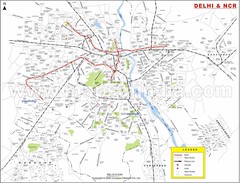
It is located in southwest Delhi, not far from the international airport and a 25 minute ride to the city centre. The land is located close to the Metro line.

The land is made of two adjacent plots, each having its own entrance thus ensuring privacy to the guesthouse residents.

The address is: J 29-30, Shyam Vihar, Najafgarh, New Delhi.
Building and lay out

Planet Why will have two distinct modules, each with a separate entrance: the guest house and the care centre. (Plans in Annex 2.)

The guest house will have 10 rooms with a reception area, a lounge and common areas. 5 rooms will be on the ground floor to ensure accessibility to guest with disabilities

The care centre would cater to a maximum of 10 persons with disabilities and a maximum of 6 women. Extra space for an additional 6 people will be available for emergency use

The centre will also have activity rooms, classrooms, computer centre, a crèche and will run an wide range of programmes with the local community.

A large basement will house all the utilities and will be space available for a wide range of training and community based activities.

We intend to build environmentally friendly structure based on the principles of the eminent architect Laurie Baker. Solar energy, geothermal heating and cooling, rainwater harvesting, grew water recycling will be used on Planet Why. (More on this in Annex 4.)

Competitive advantage

We will charge around 1500 Rupees per night for a standard room. The official price given by the government to have the appellation Bed and Breakfast is between 2000 and 3000Rs per night for Delhi. However, after a survey of the market prices, we noticed that guesthouses are charging around 5000 Rupees.
Legal Status

Planet Why will be steered by an organisation registered under Section 25 of the Companies Act of India. According to section 25(1)(a) and (b) of the Indian Companies Act, 1956, a section-25 company can be established 'for promoting commerce, art, science, religion, charity or any other useful object', provided the profits, if any, or other income is applied for promoting only the objects of the company and no dividend is paid to its members. (Annexe 5)

The staff

In keeping with Project Why’s spirit, all the employees will come from the local communities around the guesthouse and from Project Why.

Income

A reasonable room rate of 1500 Rupees per night for each of the 10 rooms, at a reasonable estimate of 60% occupancy, would generate a comfortable rate of return. In addition, income from supplemental services would boost profitability and provide training and employment opportunities for Project Why alumni and the local community. (For more on costs and forecasts, see Annex 6.)

Opportunities for supplementing income generated from the rental of guest rooms are numerous and include: -

o local crafts and organic produce
o guided tours
o Airport pick up
o Railway and other local travel assistance
o lessons and/or sessions in

• yoga
• reiki
• language
• cooking etc

The legal status of Planet Why will allow us to engage in a wide range of income generating activities.

Further, we can integrate aspects of Project Why into the house for the mutual benefit of all involved; giving guests an opportunity to interact with representatives of the real Delhi, and the representatives of the real Delhi an opportunity for employment and interaction with the wider-world. It will allow Project Why to grow.

Training

Planet Why will also enable us to further our training and skills imparting activities. It will be an ideal situation for training interested alumini in a wide range of relevant activities (hospitality, tourism, etc)and will provide the space for running classes in a wide field of useful trades (electrician, plumbing, tailoring etc). (See also Annex 3.)

Considerations

A multitude of factors must be taken into consideration in the creation of Planet Why; some are in others people’s hands, such as town planning realities and development of the surrounding habitat; some are derived from past experiences; and some are guided by the desire to see Project Why live in the long-term.

In terms of location, consideration must be given to the balance of setup costs (e.g. in the city centre which are prohibitively expensive) versus the risks of developing in a cheaper but more rural area (and attracting paying guests). A wise choice of location, is, we think, one in a fast-developing area near a metro station, major roads and the airport as this would strike the right balance.

Further, the area must offer potential in terms of the local community. Planet Why should be a benefit to the community through the facilities, training, education, employment and support it offers.

The principles of empowerment and responsibility, key factors of Project Why, will be carried over. Through their participation in suitable commercial activities, local and Project Why staff will have a sense of achievement, pride and reward.

ANNEX 3 PLANET WHY - TRAINING

One of the stated objectives of Planet Why is:

• to train and use Project Why alumni and local talent thus generating new avenues of employment.

This stems from our long held belief that education alone is not sufficient to give people access to a better future. When we launched Project Why almost a decade ago, we were aware of the need to widen our activities to include training programmes relevant to the existing job scenario.

Our efforts were thwarted by two key issues: our present legal status and the existing urban laws and restrictions, but lack of space was also a further huge constraining factor.

Planet Why is the answer to these issues: unlike Project Why, Planet Why will be a social business – that is, a company whose profits will be used to deliver its mission not shareholder/owner value. This legal form will allow us to pursue commercial activities. Planet Why’s location and design will offer us the space to do more training, freed from many of the other restrictions experienced in the past. Planet Why thus becomes a platform for diverse training programmes for men and women, young and old, able and disabled people.

The training programme envisaged is threefold:

Train Project Why alumni and local residents in all fields related to the guesthouse: housekeeping, kitchen, administration, maintenance, gardening etc

Run regular training courses in different fields (based on needs and market forces): plumbing, TV and AC repair, electrician, carpentry, tailoring, beauty culture, baking, etc.

Offer basic English conversation tuition to facilitate interactions between staff and guests.

ANNEX 4 PLANET WHY - A GREEN BUILDING


Natural resources, like fossil fuel and fresh water, support our daily lives and are essential for our present lifestyle. For an infrastructure of the size of the proposed Planet Why (residential centre and guest house) the energy (electric power and fuel) and natural resource (fresh water) demand would be significant. On both counts, conscious demand management (energy efficiency and water management) will reduce any adverse impact and be a model for the local community.
Planet Why proposes not only to use efficient energy devices such as LED lighting and energy star rated equipment, but also to supplement the sources of energy and fresh water, through modern technology, to strive for “carbon and fresh water neutrality”.
Energy generated by traditional fossil fuel systems adversely impacts the global environment that we all share. Significant reduction in the carbon footprint is possible through deploying available systems and hence it is proposed that the following be incorporated into Planet Why.
• Solar Power: Indian subcontinent’s solar radiation allows efficient use of solar photovoltaic technology to generate electricity. A hybrid 10kW solar power plant would be able to meet the demands of Planet Why whereby reducing its entire load on the coal/natural gas based utility power.
• Solar Water Heating: Kitchen, laundry and baths are users of hot/warm water all round the year. During winter, water heating is a major energy consumer. 2000LPD Solar water heating (solar collectors and solar concentrators) is to be deployed for water heating to reduce the need for secondary water heating through electricity.
• Geo-thermal heating/cooling: New Delhi has a wide temperature range. Temperature varies in the range of 2DegC (winter minimum) and 47DegC (summer maximum) which calls for effective building climate control, especially when we will be catering especially for foreign/European/American visitors, many of whom will be used to more temperate climates and/or very efficient heating/cooling. Cooling during summers and heating during winters are large energy consumers. Earth’s sub-surface temperature is known to be fairly stable (at 24DegC) at a depth of about 4 meters. Circulating air through a circuit at this depth and then feeding the same to the building provides good moderation of building climate. Air conditioning units would only be available on request and at a relatively high additional cost to discourage unnecessary use.
In the Indian context, at an average 0.94kg CO2 is emitted per kWh of electric power produced by coal based utility power providers. The 10kWp power plant would be able to produce about 13000 kWh of energy which would help save 12 tonnes of CO2 emission annually. The 2000LPD solar water heaters would replace about 20 electric (25L) geysers, which, on average consume, 7200 kWh energy annually. This helps save about 7 tonnes of CO2 emission annually. The Geo-thermal system, by replacing about 30 tonnes of air-conditioning load, would help save about 48000 kWh of electricity translating into 45 tonnes of CO2 emission.
In total the proposed system helps save about 64 tonnes of CO2 emission annually.
Besides reducing that environmental impact, the proposed system, by substituting/generating electricity, would help save about 68200 kWh electric energy annually. At an average electric unit cost of about Rs. 10/-, that amounts to a potential annual savings of the Rs. 682,000/- from the operational cost of the Planet Why.

The proposed system however would need an additional capital expense of the order of Rs.50,00,000/-. This initial investment would pay financial and social as well as environmental dividends long-term. Such an approach is consistent with Project Why’s and Planet Why’s ethos and the core values we teach. That is also why we attach importance to the above proposal.
Fresh water depletion is a global threat, therefore, for Planet Why, fresh water intake would be minimised by recycling of water and by water harvesting. In a traditional system, fresh water, taken in from bore-wells or the utility system, is used for drinking, cooking, washing/cleaning, baths and toilets. This is wasteful of valuable ‘clean’ water. Instead, we propose:
• Treating and recycling of water from kitchen and baths can be used for baths, toilets and washing/cleaning. Grey water recycling plant, using filters and selected plants to clean kitchen and bath water, will reduce the requirement of fresh water for baths, toilets and washing/cleaning. Planet Why proposes to recycle the maximum available water.

• During the monsoons in India, rain is a natural water source which is reasonably clean and easy to treat and use. The Planet Why building would incorporate design for rain water harvesting which would have catchment points and underground storage.
Although not quantified, rain water harvesting and grey water recycling would reduce the fresh water requirement significantly. A 30% savings would mean about 182kL of fresh water being conserved annually.


ANNEX 7 PLANET WHY – THE FINANCIAL SUSTAINABILITY CONCEPT

Background

To fully comprehend the Planet Why model that meshes care and sustainability, it is important to understand how Project Why has been funded to date.

Project Why was created in 1998 by an individual as repayment of a debt to society. It was initially funded through personal funds and an inheritance. Slowly, as the size of the task was better understood, the help of a few friends was sought and a small network of supporters was created.

The first formalised funding came with Enfances Indiennes, an effort of a friend who had the wisdom of institutionalising the funding of our organisation in a network of supporters from EU countries. A similar effort approach was taken in Germany.

The next quantum leap in the funding saga was taken with our web presence that saw help coming from the world over as small individual donations at first and then some organisational support (Asha Seattle, Chopra Foundation, and others).

However, we remained conscious of the fragility of our funding model and attempted to generate funds in a host of ways: making and selling a variety of products (such as T shirts, bags, jewellery, chocolates, etc); placing donation boxes in markets; setting up raffles and lotteries; and initiating a one-rupee-a-day programme within the community. But each fell short of its target, as we could not match the competition.

Moreover, the complex legislation related to some products (like soaps and food items) meant much costly red tape. In addition, effective marketing of any product requires investment and we had no spare cash we could use. A further blow was the introduction of the restrictive sealing laws (which have closed many small businesses and prevented the opening of others). These put an end to any small business product-based idea we may have had. Had we, by some miracle, found a way to overcome all those obstacles, we would then have had to stop anyway because the legal status of the Trust does not allow for any commercial activity (even when the profits are for the charity’s use rather than personal or company gain).


And yet we were convinced that, somehow, Project Why had to find a long-term independent sustainability option to give us a better degree of financial security. When the need for a residential option for a few of the most needy souls who had dropped into our lives was recognised, we felt that through this necessity we could also achieve our sustainability goal.

This led to the idea of setting up a guesthouse on the same site as the residential home. The reasons for opting for the hospitality and tourism industry are explained fully in Annex 1 but, briefly, it is based on the growth of tourism, and within it responsible tourism with a heart; the paucity of good quality, low cost rooms in Delhi; and the feedback from visitors, volunteers, travellers and friends.

At present, over and above revenue from rooms, a host of income generating options have been envisaged. They range from airport pick up to guided city tours, from yoga to cooking classes and more. Our income generation activities will not be restricted to tourism alone. A café, bakery, herb garden etc are some of the planned activities that aim at reaching a larger local population.

As with Project Why, Planet Why will also provide employment (and training) for local people.


How Planet Why will make Project Why sustainable long-term

It is important to clarify any possible misconception: Planet Why is not aimed at meeting the present budget of Project Why in its current locations. Planet Why’s profits will, first, go towards the running of the residential home on its site. Any surplus beyond that will be used to continue the work of Planet Why – that is, providing educational support to at least 500 children, empowering communities, reaching out in times of need etc. However, because we shall have our own site at Planet Why, we expect that those activities will continue there (rather than where they now happen) and that it will be from and through that site that we primarily maintain (or exceed) our current level of reaching at least 500 children at any one time. While we would be sorry to move out of South Delhi - where we have established a strong community of alumni and have started many children on the road out of poverty through education - from day one, it was always felt that Project Why’s thrust would not be location or community specific. It is also completely consistent with our core value of empowerment: our goal is not to make people dependent on us but to equip them so that, without us, they can still offer to local people the services they have themselves benefited from through Project Why.

The spirit of Project Why, from the outset, has been to raise awareness about the importance of education and show the way to parents and the community at large. It was believed then - and our experience over the last eight years has reinforced this –t hat the ultimate success of our approach lies in the ability to empower. Indeed, we regard one measure of our success as being when parents in one of our earlier locations began sending their children to private tuitions over and above Project Why because it showed they had come to realise the value of education! For another, we are proud and feel we have achieved our objectives when staff go on to higher education or well-paid jobs elsewhere; and we would feel we had really succeeded if any of our current staff or students set up their own version of Project Why in their own areas.

Sustainability for Project Why has, therefore, meant finding a way to raise sufficient funds to carry on the spirit of our work at our current level but not necessarily with the same children or staff or trainees or locations. In Planet Why, we have found a way that would allow us to do this.

Some figures

The projected revenue and operational costs figures (Annexe 6) show that a 75% occupancy of Planet Why would enable us to run the Planet Why residential centre; 100% would allow us a surplus. These figures are conservative and do not reflect the potential that Planet Why has as a wider income generating model.

It is very important to keep in mind that Planet Why would be registered as a 25 C Company (annexe 6) as this would free Project Why’s work of its present legislative stranglehold. Planet Why would enable us to revive many of our previous income generating options and open the way for many more. It will also give us the space to do so, something that is impossible in our present locations.

It is also important to remember that the current operational budget of Planet Why includes the running of the residential care centre and hence includes part of the present activities of Project Why (women’s centre, foster care, disabled section etc). In addition, as we scale up our crèche and educational activities at Planet Why - and we hope, based on past experience of how fast growth can be, that in the very first months of its operation we will reach out to a minimum of 200 local children – we will start to scale back what we offer in some of our current locations. We will keep our building in Govindpuri. We hope other centres will be taken on by staff and run as their own versions of Project Why.

From this explanation, we hope it is clear the way in which we intend Planet Why to be the sustainable, long-term, manifestation of the Project Why concept. We are not setting up a ‘trading company’ which would ‘gift’ its profits to the core charity, but are embodying in our ‘business’ our social (and environmental) charitable objectives. That is what will make Planet Why a real ‘social business.

ANNEX 8 PROJECT WHY - BRIEF HISTORY


1 Presentation and historic

The Sri Ram Goburdhun Charitable Trust using the name ‘Project Why’ is a non-governmental not-for-profit organisation engaged in education support and life-skills enhancement. It was created in May 1998 by Mrs Anouradha Bakshi as a repayment of a debt to society.
Project WHY was conceived to answer a series of queries:
• Why do children from underprivileged backgrounds perform poorly in school?
• What could be done to enhance their performance?
• What skills should be taught to them to better their employment options?
• How could this be achieved in a replicable community driven model?
Project Why aims at creating an enabling environment to help under privileged children and youth access better earning options.

When the Trust first started, we tried many different things to improve the quality of people’s lives, such as the creation of employment opportunities for those with disabilities, and running nutrition supplement programmes for street children. It was the latter that led the organisation to formulate a focused programme, named Project Why. Having started with 50 children in November 2000, we are now supporting over 700.

The model

The original model of Project Why set out to empower under-privileged and illiterate/semi-literate parents to steer the educational needs of their children by using local resources.

By making use of local talent it has been proved that quality teaching in India can be offered in the most basic of locations and situations and does not require expensive infrastructure and formal training practices.

Project Why believes in the power of the virtuous circle: by planting the seed of empowerment in the right people within the community, Project Why aims at teaching them the means to find solutions themselves. These solutions portend change, leading to more empowerment till they ultimately are in a position to take control. This is the best way to bring real and long lasting change to the lives of those who live in our slums.

Of course, for things such as diagnosis, treatment and physiotherapy, there is no choice but to reach out to professionals. In so doing, we have been fortunate only to have had to call on those who are willing to give extra in such terms as time, cost, care and compassion.

The project’s current focus is primarily on the slums of South Delhi where it runs an education support program which has seven distinct modules:

• early childhood support / kindergarten
• primary education
• secondary education
• special needs centre
• Foster care scholarship program
• computer centre
• women’s centre


All modules complement each other to create a comprehensive education development programme that will help children and youths access a better future.
Moreover, there has been a concerted effort to include other factors into the core principles of the education programme such as environmental and civic responsibility, including environmental projects.

Project Why is also a community development programme; its policy is to nurture and employ the skills available within the community. Over 98% of the team comprises members of the local community, thus generating much needed employment opportunities. The result is almost 50 new jobs, and for 80% of the staff this employment is the sole source of income for the family.

In addition, to gain the trust and confidence of local communities – and in compassion - Project Why has consciously sought to reach out in all crises. For example, we have sponsored 16 open-heart surgeries and catered to numerous medical and other emergencies among our children, staff, their families and neighbours.

Funding for Project Why has always been a precarious situation, relying on often generous but irregular and unpredictable sources:
• personal funds and inheritance of the President of the charity
• small networks of supporters created from close friends
• networks created by volunteers of Project Why
• a wider network of supporters in the EU (initiated by Enfances Indiennes)
• International support created by a web-presence

In summary, the significant milestones of Project Why to date are:

➢ 2000 - one small spoken English class for 50 children
➢ early 2001: first primary class
➢ mid 2001 first ‘pavement’ secondary class
➢ early 2002 class for special children
➢ 2003 Okhla primary centre
➢ 2005 Govindpuri centre
➢ 2006 Sanjay colony primary centre
➢ 2007 Women centre
➢ 2008 Foster Care Scholarship program

2. Organisation

Project why is supervised by a carefully selected Board of Directors and is steered by a small executive committee comprising of its President, its Secretary and its Treasurer who maintain constant contact with each other – as is demanded by a flexible and adaptable organisation.

The Project Why team comprises about 50 staff remunerated at the present minimum wage.

The vast majority were found from within the slums themselves, in effect creating a ‘self-help’ system where the teachers are trained by Project Why and the resources and remuneration provided to keep them going. The team are therefore not only motivated to help the children learn, they also recognise and understand the issues the kids face, thus creating an environment as conducive to learning and to long term, positive change as possible.

The team is reinforced by the presence of volunteers, found by an active network of Project Why volunteer alumni, and by the support of a network of specialised organisations. In the last year alone the project has received volunteers from France, Italy, UK, US, Canada and Singapore.

3. The centres

Project Why currently has several centres located within a 2 km radius in South Delhi. The main centre is located in Govindpuri with primary extension centres in Okhla, Sanjay Colony and Nehru Camp. The secondary and computer centres are located in Giri Nagar. The women’s centre is located at Madanpur Khader.

Because each centre is created for a slum or an area of a slum to answer its needs, they offer different classes and levels, and sometimes different activities.

All the teachers are from the local community itself and are trained by Project Why at the same time: they get English lessons for example. They are regularly supported in their work by volunteers from Europe and elsewhere, who range in age from teens to seniors, each bringing their skills and energy to the project.


4. Results/objectives

It was important to decide how to measure the success of the organisation so as to evaluate the impact it is having. We have always been open to external evaluation and research but we also have our own indicators.

One key measure of success is the fact that in the past 8 years no child has dropped out of school; and another is that all children have passed their yearly school examinations. In addition, many of our ex-students are now in university or gainfully employed. Without Project Why, their lives would be very different.

In India, invisible barriers exist – often caused by the systems of caste or creed – so the first goal we had was to break these barriers to make Project Why a true reflection of an ideal India. We have already succeeded: Project Why’s whole staff structure is based on ability. This demonstration of equality has meant that communities who would previously barely interact have slowly learnt to know and respect one another.

Another indicator of success, to which we attach particular importance, lies in how Project Why’s mission to empower the community to take on responsibilities - and thus to help themselves – has shown itself. For example, we have seen it as positive when staff, trained by us, go on to better paid jobs elsewhere; or when parents, who at first could not afford even the one rupee a day fee, later realise the value of education for their children and pay for them to go on to private fee-paying schools locally. Our long-term aim is for Project Why alumni to have the skills and confidence to set up their own crèches and schools etc. We want to see a new generation of social entrepreneurs developing to spread the Project Why ethos and impact, each running its own autonomous unit, adapted for the particular area in which is located.

Reaching a point where the slums of Delhi no longer needed Project Why because the local people could start up and run what we now do would be success indeed.

4. Future Plans

Conscious of the fragility of its funding model, the main thrust this year will be on strengthening our sustainability efforts through the realisation of our social business initiative, Planet Why.

We have a legacy in our current locations which will continue, we hope, through some units continuing to be run by Project Why and others being taken over by current staff or students (initially with support from us).





Sunday, June 15, 2008

the planet why proposal

PLANET WHY GUEST HOUSE AND RESIDENTIAL CARE CENTRE WITH A DIFFERENCE
Promoted by

SRI RAM GOBURDHUN CHARITABLE TRUST
(PROJECT WHY)

251A/3 Govindpuri
Kalkaji
New Delhi 110019
INDIA

91 11 26 46 99 15
91 98 11 42 48 77

Fax: 91 11 26 21 79 52


Email: anouradha.bakshi@gmail.com

Website: http://projectwhy.org


Table of contents


Executive Summary

Introduction: from project to planet why

Project Why: current status and history

Project Why: organisation and legalese

Planet Why: the rationale

Planet Why: mission and objectives

Planet Why: two core themes – 1) sustainability

Planet Why: two core themes – 2) care

Planet Why: considerations

Planet Why: vital functions

Planet Why: architecture

Planet Why: land, building, plans

Planet Why: organisation and staff


Executive Summary

Starting with one persons dream to help an unfortunate few, Project Why has grown over 8 years to become an extraordinary life-line that offers 600 children the support and education that could make the difference between a life of extreme poverty and a life of prosperity.

For it to continue it needs funding; for it to grow as well it needs a big dream. This dream has a name and it’s called Planet Why, and like the initial dream for project why it is highly ambitious but eminently achievable.

The dream is to create a home that allows Project Why to grow and guests to stay and spend quality time. Income from visitors will help sustain Project Why, the house will provide employment opportunities, and the interaction between the two will provide a unique and rewarding experience for all.

Planet Why: a guest house with a difference. This paper describes the philosophy, the concept and the plan.


Introduction: from project to planet why

Visitors to Delhi find it impossible not to notice the poverty; it’s an unavoidable ingredient of the city. It’s clearly marked on the faces of the children foraging and begging and is evident in the form of ‘permanent’ tents on the pavements of scores of the city’s streets.

According to UNESCO, 80% of India’s 1.1bn population lives below the poverty line*1, a line that equates to surviving on less than US$2 a day.

In Delhi, it is estimated that 30% of the 14 million inhabitants live in ‘slums’*2. While many dwellings here have attained an ‘official’ status and an address (allowing voting rights), the right of ownership will never be theirs; many slums are under the threat of being raised to make way for new urban projects.

However, if one takes the time to visit the slums they will receive a remarkably warm reception. Amongst the temporary structures live generous and kind people, within the debris there is order, pride in the home and a remarkably strong spirit.

The communities that live here make the best of what they have, but they know the best chance for their children to beat the poverty cycle is to get a good education.

As a result there is a thirst for knowledge and schooling; gross enrolment for primary school education is 115%, but net enrolment is 85%*3. The children of India want to learn, but the education system cannot support them all.

The neediest are those in the worst conditions, so it is amongst the slums of South Delhi that Project Why has concentrated its efforts to enhance children’s education and give them a better chance of a more prosperous future. After its 8 years of operation, Project Why currently teaches 600 children from 6 schools, has a women’s support centre, a computer centre and has sponsored 12 open heart surgeries.

More than this, Project Why comes to the aid of the communities’ desperate cases, those that have nowhere to go, and those who are in despair. This is Project Why’s spirit: to do what it can where it’s most wanted no matter what the circumstance.

Project Why’s reach is limited by expenditure, which of course is limited by income. It reactively spends what it receives and there has never been the possibility of a period of consolidation and saving – there are always desperate cases here.

Planet Why is the answer: it is Project Why’s long-term investment in itself. It is a commercially successful guest-house that generates income, and it is extra facilities that will help those in need. It will work together in harmony, and it will set an example to others.


*1 – UNESCO - http://stats.uis.unesco.org/unesco/TableViewer/document.aspx?ReportId=121&IF_Language=eng&BR_Country=3560
*2 – ASHA - http://www.asha-india.org/DelhiSlums/Background.aspx
*3 – Worldbank - http://devdata.worldbank.org/edstats/SummaryEducationProfiles/CountryData/GetShowData.asp?sCtry=IND,India

Project Why: current status and history

The Sri Ram Goburdhun Charitable Trust using the name ‘Project Why’ is a non-governmental not-for-profit organisation engaged in education support and life-skills enhancement. The projects current focus is primarily on the slum and basti children of South Delhi.

At present the organisation runs an education support programme which has 6 distinct modules:-

• early childhood support
• primary education
• secondary education
• special needs centre
• computer centre
• women’s centre

All modules complement each-other to create a comprehensive education development programme that will help children and youth access a better future.

The Trust was started in May 1998 as a repayment of a debt to society.

The learning phase took its journey through the creation of employment opportunities for those with disabilities, and running nutrition supplement programmes for street children. It was the latter that helped the organisation formulate a focused programme named Project Why which has been in place since November 2000, beginning with 50 children, now supporting 600.

The significant milestones of Project Why are: -

➢ ‘00 - One small spoken English class for 50 children
➢ early ’01 - First primary class
➢ mid ‘01 - First ‘pavement’ secondary class
➢ early ‘02 - First formal class for children with special needs
➢ ‘03 - Okhla primary centre
➢ ‘05 - Govindpuri centre
➢ ‘06 - Sanjay colony primary centre
➢ early ’07 - Women’s centre

Project Why is also a community development programme; its policy is to nurture and employ the skills available within the neighbourhoods. Over 98% of the team comprise members of the local community, thus generating much needed employment opportunities. The result is 32 new jobs, and for 80% of the staff this employment is the sole source of income for the family.

A measure of the projects success is the fact that in the past 7 years no child has dropped out of school and that all children have passed their yearly school examinations. Many of the ex-students are now in university or gainfully employed.

Another key strength of Project Why lies in its ability to empower the community to take on responsibilities and empower them to help themselves. In India, invisible barriers to success exist – most often caused by the systems of caste or creed – so the first mission was to break these barriers to make Project Why a true reflection of an ideal India. To prove its point, Project Why’s whole staff structure is based on ability. This demonstration of equality has meant that communities, who would previously barely interact, slowly learnt to discover each other, respect one another and work together to find solutions to their problems.

Further, it has been a concerted effort to include other factors into the core principles of the education programme by including environmental and civic responsibility into the curriculum, as well as demonstrating sustainability through bio-fuel projects.

India is a land of contradictions, the warmth of its people is clear to see, but the disparity between rich and poor continues to grow, and the poor and under-privileged are often those with the least support.

Project Why is about giving the ‘under-dog’ a chance, to help them, to teach them, to support them, to care for them.


Project Why: organisation and legalese

The Sri Ram Goburdhun Charitable Trust is a registered organisation and meets all the requirements of the law of the land. Particulars are listed below.

It is overlooked by a carefully selected Board of Directors and is steered by a small executive committee comprising of its President, its Secretary and its Treasurer who maintain constant contact with each other – as is demanded by a flexible and adaptable organisation.

The Project Why team comprises 38 staff. The vast majority were found from within the slums themselves, in effect creating a ‘self-help’ system where the teachers are trained by Project Why and the resources and remuneration provided to keep them going. The team are therefore not only motivated to help the children learn, they also recognise and understand the issues the kids face, thus inducing an environment as conducive to learning as possible.

The team is reinforced by the presence of volunteers, found by an active network of Project Why volunteer alumni, and by the support of a network of specialised organisations. In the last year alone the project has received volunteers from France, Italy, UK, US, Canada and Singapore.

Project Why staff are remunerated at the present minimum wage.

The annual budget of Project Why is around 1 800 000 Rs or ~ 35 000 Euros.

Particulars:

Organisation Name: SRI RAM GOBURDHUN CHARITABLE TRUST
Project Name: Project Why
Registration Number: S 32978
(Registered under Societies Registration Act XXI of 1860)
Date of Registration: 8th May 1998
Registered Address: C-15 Chiragh Enclave
New Delhi 110048
Field Office: 231A/3 Govindpuri, Kalkaji
New Delhi 110019
Telephone office: 91 11 26469915
Mobile: 9811424877
Fax: 91 1126217952
Email: anouradha.bakshi@gmail.com
Income Tax number: PAN AABTS4278D
Income Tax Exemption 2001-2002/S-2576/99/241, (renewal)
FCRA Number: 231660437
Chartered Accountants: Jai Kishan Gupta & Co
2/20 Double Storey
Jangpura Extension
New Delhi
Bankers: Citibank
Account No: 0509927 -227 (Indian rupees)
Account No: 0509991-227 (fcra)


Planet Why: the rationale

The original model for Project Why set out to empower under-privileged and illiterate/semi-literate parents to steer the educational needs of their children using local resources.

Given that in the last 7 years drop out rates have been contained and children now pass their school examinations with success, the model has proved successful.

By making use of local talent it has been proved that quality teaching in India can be offered in the most basic of locations and situations and does not require expensive infrastructure and the most formal training practices.

Project Why believes in a cyclic and self-serving process of making a difference within the slums. By planting the seeds of empowerment to the right people within the community, they then have the means to provide themselves with a solution. These solutions bring change, which will lead to more empowerment given back to the community – they are increasingly taking control.

Of course, in some areas such as condition diagnosis and physiotherapy there is no choice but to reach out to professionals, but even in so doing only those who are willing to give extra in such terms as time, cost, care and compassion are employed.

Graduates of Project Why’s schools have, in the most part, succeeded in finding employment. However, there is a real shortage of employment opportunities for those with special needs.

In Delhi, the support system for those with special needs, especially beyond school age, is negligible. A recent report by NDTV*4 (a large national news channel) found that a special needs institution in the area that was designed for 300 is actually housing 700 in squalid conditions (see report link below).

As a result there is insufficient capacity in the existing special needs section because of this lack of opportunity; there is nothing for them outside Project Why, so they stay.

Therefore the rationale behind Planet Why is to create a healthy and prosperous environment for Project Why’s special cases; it will give them an inclusive environment and a dignified, rewarding life. It will enhance the local community and also provide paying guests a unique opportunity to gain a sense of reward from their interaction with Project Why.

Planet Why will empower and provide opportunity: the same spirit as Project Why but in a different environment.


*4 - http://www.ndtv.com/convergence/ndtv/story.aspx?id=NEWEN20070030453

Planet Why: mission and objectives

Planet Why’s mission is to create a warm and enabling environment, a place where both visiting guests and their local ‘hosts’ will interface, the former providing the latter a unique chance to show case their potential and step into a world too often denied to them.

Therefore its objectives are: -

• To set up a residential facility for children and mothers who have no other option or alternative

• To set up a guesthouse for visiting tourists as a long-term sustainability option for all Project Why activities

• To set this dovetailing of hospitality and development as a possible model to be replicated elsewhere

• To train and use Project Why alumni and local talent thus generating new avenues of employment


Planet Why: two core themes - care and sustainability

Funding for Project Why has always been a precarious situation.

To date Project Why has appreciatively relied on: -

• personal funds and inheritance of the President of the charity
• small networks of supporters created from close friends
• networks created by volunteers of Project Why
• a wider network of supporters in the EU (initiated by Enfances Indiennes)
• International support created by a web-presence

Conscious of the fragility of the funding model and heavy reliance on donors, Project Why has made attempts at self-sustenance: -

• making and selling a variety of products ( T-shirts, bags, jewels, chocolates, etc)
• placing donation boxes in markets and shops
• setting up raffles and lotteries
• initiating a one-rupee-a-day programme within the community.

However, complex legislations relating to the production of items such as soaps and food items meant profitable scalability could not be achieved. Further, similarly complex accountancy restrictions of the charitable trust meant Project Why could not ‘make money’, even though it was entirely to be reinvested in the Project.

Yet Project Why needs a long-term sustainability plan.

This is how, knowing that a home is needed for the desperate souls who had depended on Project Why, it was obvious that this home should also welcome paying guests. The idea of a guesthouse is obvious for a number of reasons: the advent of tourism with a heart, the paucity of low cost rooms in Delhi, the feedback of Project Why’s networks.

Hence Project Why has two separate identities that are mutually compatible, even complimentary.

Planet Why will also reach out to the community, something that was not feasible in an urban slum. Environment projects, rainwater harvesting, health related activities, imparting new skills, adult education, empowerment of women, civic responsibility are some of the projects we intended at launch.


Planet Why: considerations

Planet Why requires very careful consideration of a multitude of factors; some controls are in the hands of others (such as town planning realities and the development of the surrounding habitat), but some are under our control and are derived from past experiences and the desire to see Project Why live in the long-term.

Even in terms of location there is a difficult decision to made - balancing setup costs e.g. in the city centre (which are prohibitively expensive) versus the risks of developing in a cheaper but more rural area (and attracting paying guests). A wise choice of location, perhaps in a fast-developing area near a metro station and airport would strike the right balance.

Further, the area must offer a good deal to the local community. Planet Why should be a benefit to the community, and the community should benefit from the facilities and support the place offers.

The principles of empowerment and responsibility, key factors of Project Why, will be carried over. By reinvigorating suitable commercial activities such as producing organic foods and beauty products, it will allow residents a sense of achievement, pride and reward. As Planet Why will become a separate but related entity to Project Why, and because one of its key purposes is to provide funding to Project Why, much of the red tape that previously restricted commercial activities will be removed.

Other opportunities could also be explored including guided tours and lessons and/or sessions in yoga, reiki, languages and cooking.

For long-term sustainability it is imperative that the guest house is consistently booked and to achieve this it is planned that Planet Why will: -

• be a rewarding and valuable experience for all guests
• offer a unique blend of culture and interaction with local people
• be affordable
• be simple, unfussy and spotlessly clean
• represent a true vision of India and Indian people
• build an enviable reputation
• be a charity sustainability model that can be replicated

Planet Why: vital functions


Planet Population

Full time inhabitants
Children, young adults, adults who came to Project Why since its inception and who have no means of support.

Daytime occupants
Children from local community, adults from community


Care and learning functions are: -

• Provide a refuge for the Project Why children and mothers
• Provide a dignified life to adults with disabilities
• Provide education support and child related activities to local children
• Run community awareness programmes with the local community (environment, health, hygiene etc)
• Provide new skills training

Planet Why will be a simple, eco friendly structure where space is utilised judiciously. It will have a room for boys and one of girls, and small quarters for the staff. There will also be a large communal room that will be used for workshops and for meetings.

The rooms will be used for activities during the day and could also serve as dormitories at night. A small storeroom will be used for stocking beddings during the day. Two well-equipped bathroom units will be available for staff and children. The premises will have a small sick bay.

A large state-of-the-art open kitchen will serve both the children and the guesthouse.

An outhouse will be used for washing clothes and will also house the back up electricity unit in a sound proof environment.

Planet Why will use as much alternative sources of energy as possible: solar, biogas etc. All waste will be recycled into compost for use in our garden.

Rainwater harvesting will be incorporated.

Income and sustainability functions are: -

• Guest house with 10 rooms (bed and simple breakfast)
• Gift shop (run by Project Why)
• Classes in local cooking, traditions etc
• Tourism facilitation (shopping, visits,)
• Shuttle services
• Special activities (meetings with villagers, Indian cooking classes, dance)


Residents: Planet Why will attract, initially through its network, then through reputation, tourists from all over the world who want to have a different and rewarding experience from their vacations.

Guests would be welcome to spend time with the children.


Planet Why: architecture and environment

The guest house and care facilities will be designed specifically to compliment each other. A picturesque central courtyard will be the tranquil but social centre of the house. Open, spacious and leafy, it will be the place where residents take time out or interact and mingle. It will be where food is served, where special occasions are celebrated, and where one simply feels comfortable to be.

The building itself will be simple and plain yet beautiful. Whitewashed walls, brightly painted doors and windows, mud murals and greenery will give a joyful feeling to the place.

The first floor will provide the guest house accommodation with 10 rooms offering relaxing comfort and decorated with local craft.

The ground floor will house three sections.

One will have a large kitchen and a living room where guests can lounge, read or just while away time playing with the children

Another side will be reserved for children where two large rooms will be converted into dorms at night for the little souls that have dropped by Project Why and who have nowhere else to go to. During the day the same rooms will be used for a host of child related activities for the children of the local community.

The third side will house staff quarters, likely to comprise mostly of single mothers as there is an urgent requirement for this type of accommodation, and all other housekeeping activities.

Building material will be eco-friendly and recycled, and we will use as much alternative sources of energy as possible: solar panels to heat water, biogas and green fuel.

All open space will be filled with trees, shrubs and plants of all kinds. The building activity will involve friends from all over the world as well as the local community, which will provide the opportunity for those that help to leave their own special mark.

The arrival of ‘tourism with a heart’, where visitors wish to lend a hand to those in need, has brought a new market opportunity within the hospitality sector. Project Why itself is already subject to strong demand and often refers visitors to suggested guest houses, few and far between though they are.

By minimising build and operation costs there will be enough of a return that will go to fund educational and other activities based on the model we have already run and validated for the past 7 years - setting Project Why free of the fragile situation it often finds itself in.

The gardens of Planet Why will be a source of pride and joy to the residents and a show-piece for the local community.

The little guesthouse will also be a training ground for our own students who can then accede to a wider range of employment. Project Why will also be an ideal place for short-term skill learning workshops and related activities.


Planet Why: land, building, costs, income, plan

Land The land purchase will be the majority of the capital expenditure of Planet Why and will cost 90 Lakh including taxes (90,00,000 Rupees equivalent to roughly US$230,000) for a suitable sized plot of 1200m2 (this figure is based on the cheapest land available in the outskirts of Delhi).

Building Existing Project Why contacts have offered many gift-in-kind donations such as sand, cement and even white goods (e.g. fridges, freezers etc). Planet Why will keep the build and operational costs low by building a modest but beautiful structure, using simple traditional methods and using local labour.

Costs A building of two floors covering a third of the land (350-400m/2) would cost 45 Lakh (US$ 115,000) and would provide enough space for Planet Why: -

• ten guest rooms with bathrooms
• a restaurant
• utility spaces (kitchen, washing etc.)
• centre for the special needs/Project Why ‘overflow’
• space for staff
• undeveloped land for gardens, horticulture and agriculture

Operating costs of the building, based on our experiences of running Project Why plus research of similar establishments, would be in the region of 16,00,000 Rupees per annum.

Income A reasonable room rate of 1500 Rupees per night for each of the 10 rooms, at a reasonable estimate of 60% occupancy would generate 31,75,000 Rupees per annum, i.e. a comfortable rate of return. In addition, income from the additional services already mentions (restaurant, laundry, lessons/courses etc.) would further boost profitability and provide employment opportunities for Project Why alumni and the local community.

The house will also employ eco-friendly and renewable energy sources; ‘sustainability’ will be a core principle of the house.

Plan Planet Why will adopt a phased build plan, however one must keep in mind that Project Why can only begin to generate funds once the guest rooms are completed and are occupied.

However, activities with the local children and community can begin once the land is secured. This will help in building a rapport with the community and gaining their trust and involvement.

The core plan is: -

1. Secure affordable land with good potential (thus insulating us from losing an opportunity caused by spiralling land costs)
1a. Utilise undeveloped land as appropriate
2. Pay off the land as soon as possible (by taking on a loan at favourable terms to be paid off by donations)
3. Use the land immediately to hold classes for local children, plant the garden and start to produce organic crops
4. Continue to raise capital for the building stage
5. Start building only when money is raised and use a modest amount of the land
6. Make good the investment and grow as appropriate


Planet Why: organisation and staff


PLANET WHY
GUEST HOUSE AND RESIDENTIAL
CARE CENTRE WITH A DIFFERENCE


Promoted by
SRI RAM GOBURDHUN CHARITABLE TRUST
(PROJECT WHY)

251A/3 Govindpuri
Kalkaji
New Delhi 110019
INDIA

91 11 26 46 99 15
91 98 11 42 48 77

Fax: 91 11 26 21 79 52


Email: anouradha.bakshi@gmail.com

Website: http://projectwhy.org


Table of contents


Executive Summary

Introduction: from project to planet why

Project Why: current status and history

Project Why: organisation and legalese

Planet Why: the rationale

Planet Why: mission and objectives

Planet Why: two core themes – 1) sustainability

Planet Why: two core themes – 2) care

Planet Why: considerations

Planet Why: vital functions

Planet Why: architecture

Planet Why: land, building, plans

Planet Why: organisation and staff


Executive Summary

Starting with one persons dream to help an unfortunate few, Project Why has grown over 8 years to become an extraordinary life-line that offers 600 children the support and education that could make the difference between a life of extreme poverty and a life of prosperity.

For it to continue it needs funding; for it to grow as well it needs a big dream. This dream has a name and it’s called Planet Why, and like the initial dream for project why it is highly ambitious but eminently achievable.

The dream is to create a home that allows Project Why to grow and guests to stay and spend quality time. Income from visitors will help sustain Project Why, the house will provide employment opportunities, and the interaction between the two will provide a unique and rewarding experience for all.

Planet Why: a guest house with a difference. This paper describes the philosophy, the concept and the plan.


Introduction: from project to planet why

Visitors to Delhi find it impossible not to notice the poverty; it’s an unavoidable ingredient of the city. It’s clearly marked on the faces of the children foraging and begging and is evident in the form of ‘permanent’ tents on the pavements of scores of the city’s streets.

According to UNESCO, 80% of India’s 1.1bn population lives below the poverty line*1, a line that equates to surviving on less than US$2 a day.

In Delhi, it is estimated that 30% of the 14 million inhabitants live in ‘slums’*2. While many dwellings here have attained an ‘official’ status and an address (allowing voting rights), the right of ownership will never be theirs; many slums are under the threat of being raised to make way for new urban projects.

However, if one takes the time to visit the slums they will receive a remarkably warm reception. Amongst the temporary structures live generous and kind people, within the debris there is order, pride in the home and a remarkably strong spirit.

The communities that live here make the best of what they have, but they know the best chance for their children to beat the poverty cycle is to get a good education.

As a result there is a thirst for knowledge and schooling; gross enrolment for primary school education is 115%, but net enrolment is 85%*3. The children of India want to learn, but the education system cannot support them all.

The neediest are those in the worst conditions, so it is amongst the slums of South Delhi that Project Why has concentrated its efforts to enhance children’s education and give them a better chance of a more prosperous future. After its 8 years of operation, Project Why currently teaches 600 children from 6 schools, has a women’s support centre, a computer centre and has sponsored 12 open heart surgeries.

More than this, Project Why comes to the aid of the communities’ desperate cases, those that have nowhere to go, and those who are in despair. This is Project Why’s spirit: to do what it can where it’s most wanted no matter what the circumstance.

Project Why’s reach is limited by expenditure, which of course is limited by income. It reactively spends what it receives and there has never been the possibility of a period of consolidation and saving – there are always desperate cases here.

Planet Why is the answer: it is Project Why’s long-term investment in itself. It is a commercially successful guest-house that generates income, and it is extra facilities that will help those in need. It will work together in harmony, and it will set an example to others.


*1 – UNESCO - http://stats.uis.unesco.org/unesco/TableViewer/document.aspx?ReportId=121&IF_Language=eng&BR_Country=3560
*2 – ASHA - http://www.asha-india.org/DelhiSlums/Background.aspx
*3 – Worldbank - http://devdata.worldbank.org/edstats/SummaryEducationProfiles/CountryData/GetShowData.asp?sCtry=IND,India

Project Why: current status and history

The Sri Ram Goburdhun Charitable Trust using the name ‘Project Why’ is a non-governmental not-for-profit organisation engaged in education support and life-skills enhancement. The projects current focus is primarily on the slum and basti children of South Delhi.

At present the organisation runs an education support programme which has 6 distinct modules:-

• early childhood support
• primary education
• secondary education
• special needs centre
• computer centre
• women’s centre

All modules complement each-other to create a comprehensive education development programme that will help children and youth access a better future.

The Trust was started in May 1998 as a repayment of a debt to society.

The learning phase took its journey through the creation of employment opportunities for those with disabilities, and running nutrition supplement programmes for street children. It was the latter that helped the organisation formulate a focused programme named Project Why which has been in place since November 2000, beginning with 50 children, now supporting 600.

The significant milestones of Project Why are: -

➢ ‘00 - One small spoken English class for 50 children
➢ early ’01 - First primary class
➢ mid ‘01 - First ‘pavement’ secondary class
➢ early ‘02 - First formal class for children with special needs
➢ ‘03 - Okhla primary centre
➢ ‘05 - Govindpuri centre
➢ ‘06 - Sanjay colony primary centre
➢ early ’07 - Women’s centre

Project Why is also a community development programme; its policy is to nurture and employ the skills available within the neighbourhoods. Over 98% of the team comprise members of the local community, thus generating much needed employment opportunities. The result is 32 new jobs, and for 80% of the staff this employment is the sole source of income for the family.

A measure of the projects success is the fact that in the past 7 years no child has dropped out of school and that all children have passed their yearly school examinations. Many of the ex-students are now in university or gainfully employed.

Another key strength of Project Why lies in its ability to empower the community to take on responsibilities and empower them to help themselves. In India, invisible barriers to success exist – most often caused by the systems of caste or creed – so the first mission was to break these barriers to make Project Why a true reflection of an ideal India. To prove its point, Project Why’s whole staff structure is based on ability. This demonstration of equality has meant that communities, who would previously barely interact, slowly learnt to discover each other, respect one another and work together to find solutions to their problems.

Further, it has been a concerted effort to include other factors into the core principles of the education programme by including environmental and civic responsibility into the curriculum, as well as demonstrating sustainability through bio-fuel projects.

India is a land of contradictions, the warmth of its people is clear to see, but the disparity between rich and poor continues to grow, and the poor and under-privileged are often those with the least support.

Project Why is about giving the ‘under-dog’ a chance, to help them, to teach them, to support them, to care for them.


Project Why: organisation and legalese

The Sri Ram Goburdhun Charitable Trust is a registered organisation and meets all the requirements of the law of the land. Particulars are listed below.

It is overlooked by a carefully selected Board of Directors and is steered by a small executive committee comprising of its President, its Secretary and its Treasurer who maintain constant contact with each other – as is demanded by a flexible and adaptable organisation.

The Project Why team comprises 38 staff. The vast majority were found from within the slums themselves, in effect creating a ‘self-help’ system where the teachers are trained by Project Why and the resources and remuneration provided to keep them going. The team are therefore not only motivated to help the children learn, they also recognise and understand the issues the kids face, thus inducing an environment as conducive to learning as possible.

The team is reinforced by the presence of volunteers, found by an active network of Project Why volunteer alumni, and by the support of a network of specialised organisations. In the last year alone the project has received volunteers from France, Italy, UK, US, Canada and Singapore.

Project Why staff are remunerated at the present minimum wage.

The annual budget of Project Why is around 1 800 000 Rs or ~ 35 000 Euros.

Particulars:

Organisation Name: SRI RAM GOBURDHUN CHARITABLE TRUST
Project Name: Project Why
Registration Number: S 32978
(Registered under Societies Registration Act XXI of 1860)
Date of Registration: 8th May 1998
Registered Address: C-15 Chiragh Enclave
New Delhi 110048
Field Office: 231A/3 Govindpuri, Kalkaji
New Delhi 110019
Telephone office: 91 11 26469915
Mobile: 9811424877
Fax: 91 1126217952
Email: anouradha.bakshi@gmail.com
Income Tax number: PAN AABTS4278D
Income Tax Exemption 2001-2002/S-2576/99/241, (renewal)
FCRA Number: 231660437
Chartered Accountants: Jai Kishan Gupta & Co
2/20 Double Storey
Jangpura Extension
New Delhi
Bankers: Citibank
Account No: 0509927 -227 (Indian rupees)
Account No: 0509991-227 (fcra)


Planet Why: the rationale

The original model for Project Why set out to empower under-privileged and illiterate/semi-literate parents to steer the educational needs of their children using local resources.

Given that in the last 7 years drop out rates have been contained and children now pass their school examinations with success, the model has proved successful.

By making use of local talent it has been proved that quality teaching in India can be offered in the most basic of locations and situations and does not require expensive infrastructure and the most formal training practices.

Project Why believes in a cyclic and self-serving process of making a difference within the slums. By planting the seeds of empowerment to the right people within the community, they then have the means to provide themselves with a solution. These solutions bring change, which will lead to more empowerment given back to the community – they are increasingly taking control.

Of course, in some areas such as condition diagnosis and physiotherapy there is no choice but to reach out to professionals, but even in so doing only those who are willing to give extra in such terms as time, cost, care and compassion are employed.

Graduates of Project Why’s schools have, in the most part, succeeded in finding employment. However, there is a real shortage of employment opportunities for those with special needs.

In Delhi, the support system for those with special needs, especially beyond school age, is negligible. A recent report by NDTV*4 (a large national news channel) found that a special needs institution in the area that was designed for 300 is actually housing 700 in squalid conditions (see report link below).

As a result there is insufficient capacity in the existing special needs section because of this lack of opportunity; there is nothing for them outside Project Why, so they stay.

Therefore the rationale behind Planet Why is to create a healthy and prosperous environment for Project Why’s special cases; it will give them an inclusive environment and a dignified, rewarding life. It will enhance the local community and also provide paying guests a unique opportunity to gain a sense of reward from their interaction with Project Why.

Planet Why will empower and provide opportunity: the same spirit as Project Why but in a different environment.


*4 - http://www.ndtv.com/convergence/ndtv/story.aspx?id=NEWEN20070030453

Planet Why: mission and objectives

Planet Why’s mission is to create a warm and enabling environment, a place where both visiting guests and their local ‘hosts’ will interface, the former providing the latter a unique chance to show case their potential and step into a world too often denied to them.

Therefore its objectives are: -

• To set up a residential facility for children and mothers who have no other option or alternative

• To set up a guesthouse for visiting tourists as a long-term sustainability option for all Project Why activities

• To set this dovetailing of hospitality and development as a possible model to be replicated elsewhere

• To train and use Project Why alumni and local talent thus generating new avenues of employment


Planet Why: two core themes - care and sustainability

Funding for Project Why has always been a precarious situation.

To date Project Why has appreciatively relied on: -

• personal funds and inheritance of the President of the charity
• small networks of supporters created from close friends
• networks created by volunteers of Project Why
• a wider network of supporters in the EU (initiated by Enfances Indiennes)
• International support created by a web-presence

Conscious of the fragility of the funding model and heavy reliance on donors, Project Why has made attempts at self-sustenance: -

• making and selling a variety of products ( T-shirts, bags, jewels, chocolates, etc)
• placing donation boxes in markets and shops
• setting up raffles and lotteries
• initiating a one-rupee-a-day programme within the community.

However, complex legislations relating to the production of items such as soaps and food items meant profitable scalability could not be achieved. Further, similarly complex accountancy restrictions of the charitable trust meant Project Why could not ‘make money’, even though it was entirely to be reinvested in the Project.

Yet Project Why needs a long-term sustainability plan.

This is how, knowing that a home is needed for the desperate souls who had depended on Project Why, it was obvious that this home should also welcome paying guests. The idea of a guesthouse is obvious for a number of reasons: the advent of tourism with a heart, the paucity of low cost rooms in Delhi, the feedback of Project Why’s networks.

Hence Project Why has two separate identities that are mutually compatible, even complimentary.

Planet Why will also reach out to the community, something that was not feasible in an urban slum. Environment projects, rainwater harvesting, health related activities, imparting new skills, adult education, empowerment of women, civic responsibility are some of the projects we intended at launch.


Planet Why: considerations

Planet Why requires very careful consideration of a multitude of factors; some controls are in the hands of others (such as town planning realities and the development of the surrounding habitat), but some are under our control and are derived from past experiences and the desire to see Project Why live in the long-term.

Even in terms of location there is a difficult decision to made - balancing setup costs e.g. in the city centre (which are prohibitively expensive) versus the risks of developing in a cheaper but more rural area (and attracting paying guests). A wise choice of location, perhaps in a fast-developing area near a metro station and airport would strike the right balance.

Further, the area must offer a good deal to the local community. Planet Why should be a benefit to the community, and the community should benefit from the facilities and support the place offers.

The principles of empowerment and responsibility, key factors of Project Why, will be carried over. By reinvigorating suitable commercial activities such as producing organic foods and beauty products, it will allow residents a sense of achievement, pride and reward. As Planet Why will become a separate but related entity to Project Why, and because one of its key purposes is to provide funding to Project Why, much of the red tape that previously restricted commercial activities will be removed.

Other opportunities could also be explored including guided tours and lessons and/or sessions in yoga, reiki, languages and cooking.

For long-term sustainability it is imperative that the guest house is consistently booked and to achieve this it is planned that Planet Why will: -

• be a rewarding and valuable experience for all guests
• offer a unique blend of culture and interaction with local people
• be affordable
• be simple, unfussy and spotlessly clean
• represent a true vision of India and Indian people
• build an enviable reputation
• be a charity sustainability model that can be replicated

Planet Why: vital functions


Planet Population

Full time inhabitants
Children, young adults, adults who came to Project Why since its inception and who have no means of support.

Daytime occupants
Children from local community, adults from community


Care and learning functions are: -

• Provide a refuge for the Project Why children and mothers
• Provide a dignified life to adults with disabilities
• Provide education support and child related activities to local children
• Run community awareness programmes with the local community (environment, health, hygiene etc)
• Provide new skills training

Planet Why will be a simple, eco friendly structure where space is utilised judiciously. It will have a room for boys and one of girls, and small quarters for the staff. There will also be a large communal room that will be used for workshops and for meetings.

The rooms will be used for activities during the day and could also serve as dormitories at night. A small storeroom will be used for stocking beddings during the day. Two well-equipped bathroom units will be available for staff and children. The premises will have a small sick bay.

A large state-of-the-art open kitchen will serve both the children and the guesthouse.

An outhouse will be used for washing clothes and will also house the back up electricity unit in a sound proof environment.

Planet Why will use as much alternative sources of energy as possible: solar, biogas etc. All waste will be recycled into compost for use in our garden.

Rainwater harvesting will be incorporated.

Income and sustainability functions are: -

• Guest house with 10 rooms (bed and simple breakfast)
• Gift shop (run by Project Why)
• Classes in local cooking, traditions etc
• Tourism facilitation (shopping, visits,)
• Shuttle services
• Special activities (meetings with villagers, Indian cooking classes, dance)


Residents: Planet Why will attract, initially through its network, then through reputation, tourists from all over the world who want to have a different and rewarding experience from their vacations.

Guests would be welcome to spend time with the children.


Planet Why: architecture and environment

The guest house and care facilities will be designed specifically to compliment each other. A picturesque central courtyard will be the tranquil but social centre of the house. Open, spacious and leafy, it will be the place where residents take time out or interact and mingle. It will be where food is served, where special occasions are celebrated, and where one simply feels comfortable to be.

The building itself will be simple and plain yet beautiful. Whitewashed walls, brightly painted doors and windows, mud murals and greenery will give a joyful feeling to the place.

The first floor will provide the guest house accommodation with 10 rooms offering relaxing comfort and decorated with local craft.

The ground floor will house three sections.

One will have a large kitchen and a living room where guests can lounge, read or just while away time playing with the children

Another side will be reserved for children where two large rooms will be converted into dorms at night for the little souls that have dropped by Project Why and who have nowhere else to go to. During the day the same rooms will be used for a host of child related activities for the children of the local community.

The third side will house staff quarters, likely to comprise mostly of single mothers as there is an urgent requirement for this type of accommodation, and all other housekeeping activities.

Building material will be eco-friendly and recycled, and we will use as much alternative sources of energy as possible: solar panels to heat water, biogas and green fuel.

All open space will be filled with trees, shrubs and plants of all kinds. The building activity will involve friends from all over the world as well as the local community, which will provide the opportunity for those that help to leave their own special mark.

The arrival of ‘tourism with a heart’, where visitors wish to lend a hand to those in need, has brought a new market opportunity within the hospitality sector. Project Why itself is already subject to strong demand and often refers visitors to suggested guest houses, few and far between though they are.

By minimising build and operation costs there will be enough of a return that will go to fund educational and other activities based on the model we have already run and validated for the past 7 years - setting Project Why free of the fragile situation it often finds itself in.

The gardens of Planet Why will be a source of pride and joy to the residents and a show-piece for the local community.

The little guesthouse will also be a training ground for our own students who can then accede to a wider range of employment. Project Why will also be an ideal place for short-term skill learning workshops and related activities.


Planet Why: land, building, costs, income, plan

Land The land purchase will be the majority of the capital expenditure of Planet Why and will cost 90 Lakh including taxes (90,00,000 Rupees equivalent to roughly US$230,000) for a suitable sized plot of 1200m2 (this figure is based on the cheapest land available in the outskirts of Delhi).

Building Existing Project Why contacts have offered many gift-in-kind donations such as sand, cement and even white goods (e.g. fridges, freezers etc). Planet Why will keep the build and operational costs low by building a modest but beautiful structure, using simple traditional methods and using local labour.

Costs A building of two floors covering a third of the land (350-400m/2) would cost 45 Lakh (US$ 115,000) and would provide enough space for Planet Why: -

• ten guest rooms with bathrooms
• a restaurant
• utility spaces (kitchen, washing etc.)
• centre for the special needs/Project Why ‘overflow’
• space for staff
• undeveloped land for gardens, horticulture and agriculture

Operating costs of the building, based on our experiences of running Project Why plus research of similar establishments, would be in the region of 16,00,000 Rupees per annum.

[Insert summary cost schedule here]

Income A reasonable room rate of 1500 Rupees per night for each of the 10 rooms, at a reasonable estimate of 60% occupancy would generate 31,75,000 Rupees per annum, i.e. a comfortable rate of return. In addition, income from the additional services already mentions (restaurant, laundry, lessons/courses etc.) would further boost profitability and provide employment opportunities for Project Why alumni and the local community.

The house will also employ eco-friendly and renewable energy sources; ‘sustainability’ will be a core principle of the house.

Plan Planet Why will adopt a phased build plan, however one must keep in mind that Project Why can only begin to generate funds once the guest rooms are completed and are occupied.

However, activities with the local children and community can begin once the land is secured. This will help in building a rapport with the community and gaining their trust and involvement.

The core plan is: -

1. Secure affordable land with good potential (thus insulating us from losing an opportunity caused by spiralling land costs)
1a. Utilise undeveloped land as appropriate
2. Pay off the land as soon as possible (by taking on a loan at favourable terms to be paid off by donations)
3. Use the land immediately to hold classes for local children, plant the garden and start to produce organic crops
4. Continue to raise capital for the building stage
5. Start building only when money is raised and use a modest amount of the land
6. Make good the investment and grow as appropriate


Planet Why: organisation and staff

Saturday, March 22, 2008

Friday, February 22, 2008

Case for Planet Why

Project Why and Planet Why – What are they about?

Project Why began as a spontaneous reaction to help an unfortunate few, and has grown organically over eight years to become an extraordinary life-line that offers children hope instead of despondency.

The initial few were kids born into the slums in the South of Delhi, but they were the unluckiest of the unlucky; born with special needs into a place where even able children stand little chance. Project Why created both classes and teachers from resources in the slums and they quickly became full. So more had to be done, more money found, more teachers trained, more class-rooms formed from the rubble. Today Project Why teaches 600 kids, employs 30 local staff and has sponsored 12 open heart surgeries.

Project Why is a hand to mouth type of organisation; desperation connects the income received from donors with the investment in its resources.

So Planet Why is the answer to this desperate struggle - Planet Why is the dream that a sustainable future for Project Why might exist, that Project Why might have a chance to reach out to a few more and to grow, that the begging for help might be supplemented by a more predictable life-line. It would mean that Project Why will be safeguarded and that graduating Project Why students might lend a hand to subsequent generations.

The Vision of Planet Why Planet Why’s principle motive is to provide a stable and sustainable income for Project Why. Given India’s fast-growing economy and Delhi’s booming tourist industry an obvious opportunity is to find commercial success in the hospitality sector. It is well publicised that there is a shortage of reasonable and comfortable guest houses in the Delhi area (see Lonely Planet etc) and we have seen that the Ninos Hotel in Cusco is exactly this model - a successful guest house whose profits support child aid projects. If we can create such a guesthouse we know it will work.


Supplementing income generated from the rental of guest rooms are numerous other opportunities such as: -

• local crafts and organic produce
• guided tours
• lessons and/or sessions in
o yoga
o reiki
o language
o cooking

Further, we can integrate aspects of Project Why into the house for the mutual benefit of all involved; giving guests an opportunity to interact with representatives of the real Delhi, and the representatives of the real Delhi an opportunity for employment and interaction with the wider-world. It will allow Project Why to grow.

Achieving our vision In a perfect world we would renovate space in the centre of Delhi, but extremely high property prices make this idea unfeasible.

A more realistic and pragmatic approach will see us start by acquiring ‘cheap’ land and take a stepping-stone approach: -

1. Secure affordable land with good potential (thus insulating us from losing an opportunity caused by spiralling land costs)
2. Pay off the land as soon as possible (by taking on a loan at favourable terms to be paid off by donations)
3. Use the land immediately to hold classes for local children, plant the garden and start to produce organic crops
4. Continue to raise capital for the building stage
5. Start building only when money is raised and use a modest amount of the land
6. Make good the investment and grow as appropriate

The house will also employ eco-friendly and renewable energy sources; ‘sustainability’ will be a core principle of the house.

Costs The land purchase will be the majority of the capital expenditure of Planet Why and will cost 90 Lakh including taxes (90,00,000 Rupees equivalent to roughly US$230,000) for 1200m/2. Suitable land has been identified and is discussed later.

Existing Project Why contacts have offered many gift-in-kind donations such as sand, cement and even white goods (e.g. fridges, freezers etc) so we are confident that by building a modest but beautiful structure, using simple traditional methods and using local labour, we can keep the build and operational costs low.

A building of two floors covering a third of the land (350-400m/2) would cost approximately 70 Lakh and would provide enough space for: -
• ten guest rooms with bathrooms
• a restaurant
• utility spaces (kitchen, washing etc.)
• centre for the special needs/Project Why ‘overflow’
• space for staff
• undeveloped land to be used as needs demand

Operating costs of the building, based on our experiences of running Project Why plus research of similar establishments, would be in the region of 16,00,000 Rupees per annum.

Income A reasonable room rate of 1500 Rupees per night for each of the 10 rooms, at a reasonable estimate of 60% occupancy would generate 31,75,000 Rupees per annum, i.e. a comfortable rate of return. In addition, income from supplemental services such as the restaurant, laundry, lessons/courses etc. would boost profitability and provide employment opportunities for Project Why alumni and the local community.

Location We have identified land in Shyam Vihar, Najafgarh 2 which is a tranquil area in Delhi’s quieter suburbs near to the airport and close to the Jaipur Agra highways. A map is provided below (the blue x marks the spot). It has good transport links into central Delhi (The metro line 3 is already operational and is a 15 minutes run) and the area is undergoing rapid redevelopment.

The location is perfect for friends of Project Why and those seeking a Delhi base away from the frenetic city centre. With a purchase price of 8,500 Rupees per m/2 (which is incomparable to prices in the centre and cheaper than any land found near) it makes a sound purchase.

What do we need from you? We have found ourselves under some pressure having committed to the land and taken on a debt that we need to pay within a year (we initially thought the terms were more reasonable).

In the absence of the benevolent donor willing to pay the setup costs (which the Ninos project was lucky enough to find), we need your help for us to acquire the land. To date we have met every challenge that has come our way with the help of large-hearted individuals who have always responded to our pleas. Though this new challenge is not linked to a single humane case, it is nevertheless in consonance with the spirit of Project Why. This land will give a secure, stable and dignified future to the desperate souls who came our way as well as permanence to Project Why.

Monday, February 4, 2008

Our first students

Sunday 3rd February was Utpal's PTM but also the day when he set foot on planet why. For me it was a very special moment as it reminded me of the Little Prince visiting all his planets.

There were other visitors too: Adrian, Andy and two of our volunteers Mathilde and Monica. I must admit I was a little anxious at their reactions. But to my utter delight everyone liked the land and its size! We spend some time perusing the place and even met our new neighbours who welcomed us with warmth. While we were there, a few young lads came by.They both were students of the nearby secondary school and were eager to talk.

As we chatted along I realised that we had found our first students and knew that me were on course.

Sunday, January 27, 2008

a special moment

Sunday 27th January 2008 will always be a special day for planet why as this is the day we paid the first installment for the land.
For us this was a momentous moment as it was not just a matter of giving a cheque, or acquiring a plot of land but the first step towards realising a huge dream.

It was little Utpal who handed over the cheque as for us he is blessed and also proof that nothing is impossible.

Wednesday, January 23, 2008

Planet why - a reality


Planet why is now a reality. Thanks to wonderful friends we have been able to secure an interest free loan to purchase the land! This was very important as land prices were escalating by the minute! We are not far from the land we once sought and even have an address: Khasra 373 Shyam Vihar, Phase I J block (village Deendarpur)!

Documents have been perused and a token amount paid. The first instalment will be paid in a couple of days and we hope to have Utpal hand over the cheque! There are two plots and the total surface is a little over 1100 square yards.